Ho-Pac Vibratory Core
Repeatable high-frequency energy for controlled pile driving and extraction.
Hydraulic Vibratory Pile Driver
Technical specifications, application-fit data, and carrier-integration requirements for contractors evaluating the VMV 818.
Ho-Pac Vibratory Technology
At the core of the VMV 818 is proven Ho-Pac vibratory technology, integrated into Viking's engineered platform to deliver dependable performance in demanding marine and foundation applications.
The system provides smooth, controlled vibration for efficient pile installation while helping reduce unnecessary stress on the carrier machine.
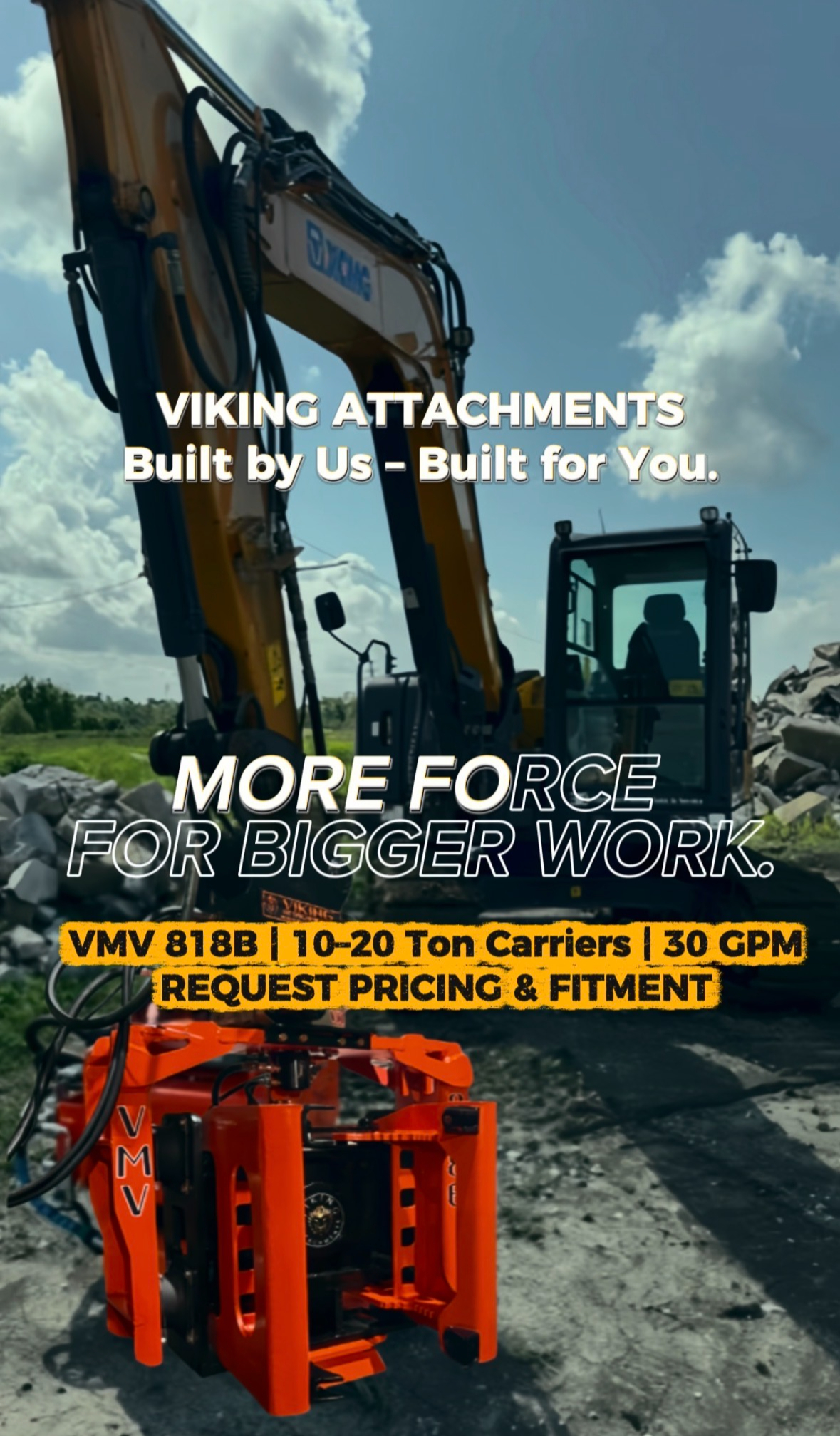
VMV 818
Whether driving sheet pile, H-beam, timber, pipe casing, or vinyl piles, the VMV 818 combines consistent vibratory force with precise hydraulic control to maximize productivity across a wide range of soil conditions.
Paired with Viking's American-built frame, hydraulic system, and factory-direct support, the result is a durable, contractor-focused pile-driving solution built for everyday production.
Technical Snapshot
The operating envelope for carrier selection, hydraulic circuit planning, clamp configuration, and safe machine integration.
| Specification | VMV 818 | Selection Impact |
|---|---|---|
| Carrier Class | 8-20 ton excavators | Initial carrier-size and lift-capacity screening. |
| Operating Weight | 2,200 lbs | Affects lift chart, stability, transport, and working radius. |
| Impulse Force | 16,000 lb | Primary vibratory output for pile driving and extraction. |
| Operating Frequency | 2,100 RPM | Controls the rate of vibratory energy transferred into the pile. |
| Hydraulic Demand | 30 GPM / 2,500-2,700 PSI | Must be available at normal engine operating RPM. |
| Maximum Back Pressure | 210 PSI | Defines the allowable restriction in the return circuit. |
| Minimum Power | 45 HP | Minimum hydraulic power requirement for the attachment system. |
| Clamp Opening | 0-22 in | Used to screen pile width, profile, and clamp compatibility. |
System Data
Repeatable high-frequency energy for controlled pile driving and extraction.
Adjustable response for pile profile, soil resistance, and operator control.
Handles, aligns, grips, drives, and extracts compatible pile profiles.
Engineered around the excavator's flow, pressure, return, and case-drain circuit.
American-built frame integrating the vibratory core, clamp, coupler, and hydraulic routing.
Carrier matching, commissioning guidance, replacement parts, and technical support.
Application Data
Use the application matrix to compare the planned work, common pile profiles, and the job conditions that must be confirmed before configuration.
Bulkheads, docks, seawalls, timber pile, vinyl pile, and sheet pile. Confirm access, working radius, soil resistance, pile handling, and carrier stability.
H-beam, sheet pile, pipe casing, retaining systems, and commercial foundations. Confirm pile dimensions, embedment, ground conditions, clamp fit, and production target.
Posts, pipe casing, shoring, trench-edge work, and confined-access installation. Confirm machine access, return circuit, lift chart, working radius, and jobsite stability.
Driving, repositioning, and extracting compatible pile profiles. Confirm clamp grip, pile condition, extraction resistance, hydraulic control, and carrier capacity.
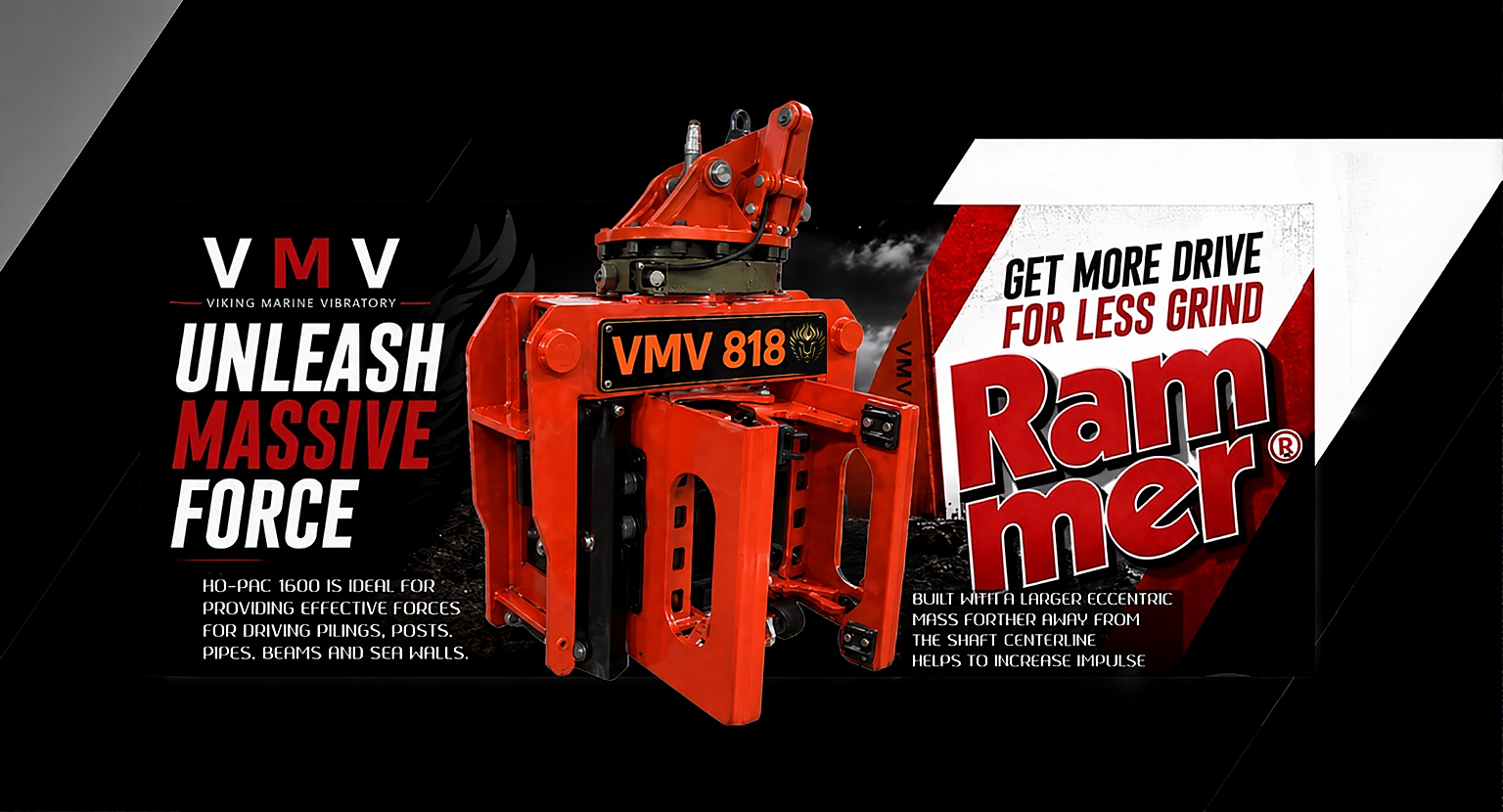
At the core of the VMV 818 is proven Ho-Pac vibratory technology, integrated into Viking's engineered platform to deliver dependable performance in demanding marine and foundation applications. The system provides smooth, controlled vibration for efficient pile installation while helping reduce unnecessary stress on the carrier machine.
Whether driving sheet pile, H-beam, timber, pipe casing, or vinyl piles, the VMV 818 combines consistent vibratory force with precise hydraulic control to maximize productivity across a wide range of soil conditions. Paired with Viking's American-built frame, hydraulic system, and factory-direct support, the result is a durable, contractor-focused pile-driving solution built for everyday production.
VMV 818 FAQ
Five practical questions to settle before the VMV 818 is configured, quoted, and sent to the job.
Move up when a compact system cannot maintain the required production rate, control the intended pile profile, or deliver reliable extraction across the expected ground conditions.
Marine, foundation, utility, retaining, and civil scopes that demand repeat pile driving and extraction are the strongest fit—especially where carrier mobility and access remain critical.
No. Pile width, profile, wall thickness, material, handling load, and required grip determine the correct clamp or jaw configuration. Viking confirms the interface before quoting.
Pump flow, operating pressure, return pressure, case-drain routing, hose and coupler capacity, hydraulic mode, lift chart, stability, attachment weight, and working radius must agree with the application.
Send the excavator make and model, auxiliary hydraulic data, pile profile and dimensions, soil or job conditions, working radius, project location, and schedule. Complete technical inputs produce a faster, cleaner machine match.